



Remember when “checking your medical records” meant calling the front desk and waiting for someone to physically pull a file from a wall of manila folders? What a time.
Today, patients expect to book appointments, view lab results, and message their doctors with a few taps on their smartphones. This digital shift has revolutionized healthcare accessibility, but it has also opened a new frontier of risk.
Healthcare organizations are custodians of some of the most sensitive personal data in existence. Unlike a stolen credit card, which can be cancelled, a stolen medical history is permanent.
For doctors, dentists, and vision specialists, the challenge is balancing this need for digital convenience with ironclad security. This is where the partnership between healthcare providers and professional medical office IT support becomes not just helpful, but critical.
The Unique Vulnerability of Patient Portals
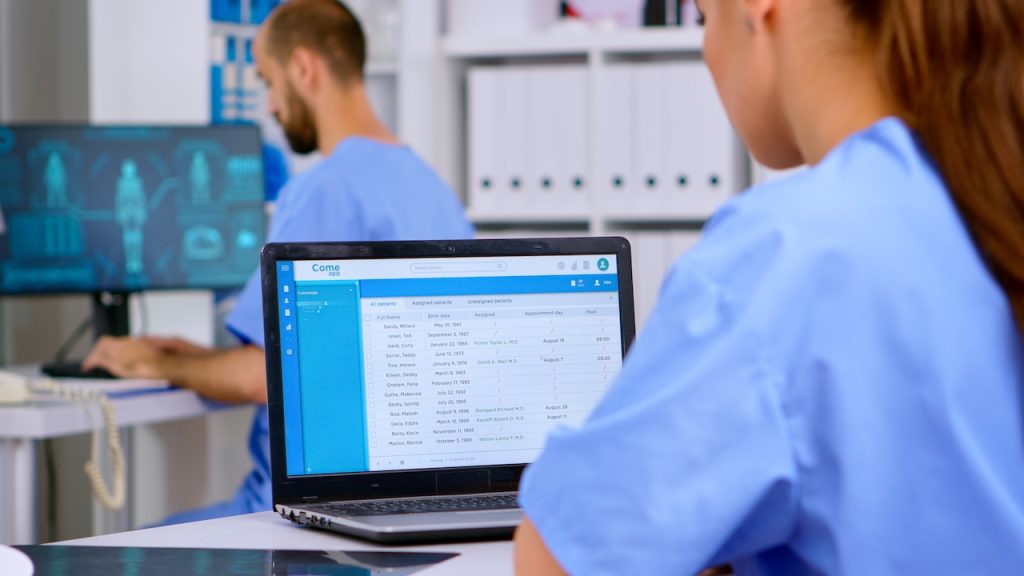
Patient portals are essentially the digital front door to your practice. While they offer incredible efficiency, they also increase your “attack surface”—the number of points where an unauthorized user could try to enter your system.
Without proper oversight, a patient portal can become a liability, like in the case of this recent breach of Manage My Health. If a patient uses a weak password, or if the software isn’t updated with the latest security patches, the door is left ajar. Professional medical office IT support closes that door and locks it tight.
Managed IT services do more than just fix broken printers; they provide 24/7 monitoring of your network. This means that while you are treating patients, automated systems and security experts are watching for suspicious activity, ensuring that the person logging into the portal is actually your patient and not a bad actor halfway across the world.
3 Strategies to Protect Your Practice and Patients
Technology is only half the battle; the other half is human behavior. Even the most expensive firewall can’t stop a staff member from accidentally handing over credentials via a phishing email. Implementing a culture of security starts with simple, enforceable best practices.
Enforce Multi-Factor Authentication (MFA)
It might seem like an extra step, but MFA is one of the most effective tools against unauthorized access. By requiring a second form of verification—like a text code or an authenticator app—you ensure that a stolen password alone isn’t enough to breach a patient’s account.
Regular Security Training
Your staff needs to know what a threat looks like. Cyber attacks are becoming increasingly sophisticated, often disguising themselves as urgent emails from vendors or insurance companies. Regular training can help your team spot these red flags before they click.
Keep Software Updated
Outdated software is a hacker’s best friend. Whether it’s your Electronic Health Records (EHR) system or the patient portal software itself, updates often contain critical security patches. A medical office IT partner ensures these updates happen in the background without disrupting your daily workflow.
Frequently Asked Questions About Medical Office IT Support
Why do hackers target small medical offices?
Many small practices assume they are too small to be noticed. However, cybercriminals often view smaller offices as “low hanging fruit” because they typically have fewer security measures in place than large hospitals, yet they hold the same valuable data (Social Security numbers, insurance details, and medical histories).
How does IT support help with HIPAA compliance?
HIPAA sets strict guidelines for how Protected Health Information (PHI) is stored and shared. A managed IT provider helps configure your patient portals and internal networks to meet these specific regulatory standards, ensuring data is encrypted and access is logged.
Can IT support improve the patient experience?
Absolutely. Beyond security, medical office IT support ensures your systems are running fast and efficiently. Nothing frustrates a patient more than a portal that is constantly crashing or a slow check-in process. Reliable technology builds trust.
Securing Your Digital Front Door
The transition to digital healthcare is unavoidable, but navigating the security risks doesn’t have to be something you do alone. Your expertise is in caring for patients; the technical defense of their data should be left to experts who understand the landscape.
By implementing robust security measures and partnering with a dedicated IT support team, you can offer your patients the convenience they want with the safety they deserve.
Galaxy IT provides dedicated support and a people-first approach to healthcare organizations. From 24/7 monitoring to HIPAA compliance, we help you focus on what matters most: your patients.
Get IT Support for Healthcare, Vision, Dental and Medical Offices
